Concentric and Eccentric Pedaling-Type Interval Exercise on a Soft Robot for Stable Coronary Artery Disease Patients: Toward a Personalized Protocol.
- Fitze DP Laboratory for Muscle Plasticity, Department of Orthopaedics, Balgrist University Hospital, University of Zurich, Zurich, Switzerland.
- Franchi M Laboratory for Muscle Plasticity, Department of Orthopaedics, Balgrist University Hospital, University of Zurich, Zurich, Switzerland.
- Popp WL Spinal Cord Injury Center, Balgrist University Hospital, Zurich, Switzerland.
- Ruoss S Laboratory for Muscle Plasticity, Department of Orthopaedics, Balgrist University Hospital, University of Zurich, Zurich, Switzerland.
- Catuogno S Balgrist Move>Med, Swiss Olympic Medical Center, Balgrist University Hospital, Zurich, Switzerland.
- Camenisch K Balgrist Move>Med, Swiss Olympic Medical Center, Balgrist University Hospital, Zurich, Switzerland.
- Lehmann D Balgrist Move>Med, Swiss Olympic Medical Center, Balgrist University Hospital, Zurich, Switzerland.
- Schmied CM University Heart Center Zurich, Sports Cardiology Section, Department of Cardiology, University Hospital Zurich, University of Zurich, Zurich, Switzerland.
- Niederseer D University Heart Center Zurich, Sports Cardiology Section, Department of Cardiology, University Hospital Zurich, University of Zurich, Zurich, Switzerland.
- Frey WO Balgrist Move>Med, Swiss Olympic Medical Center, Balgrist University Hospital, Zurich, Switzerland.
- Flück M Laboratory for Muscle Plasticity, Department of Orthopaedics, Balgrist University Hospital, University of Zurich, Zurich, Switzerland.
- 2019-03-28
Published in:
- JMIR research protocols. - 2019
cardiovascular rehabilitation
concentric and eccentric exercise
high-intensity interval training
muscle oxygen saturation
near-infrared spectroscopy
peak oxygen uptake
ramp test
skeletal muscle power
soft robot
English
BACKGROUND
Cardiovascular diseases are the leading causes of death worldwide, and coronary artery disease (CAD) is one of the most common causes of death in Europe. Leading cardiac societies recommend exercise as an integral part of cardiovascular rehabilitation because it reduces the morbidity and mortality of patients with CAD. Continuous low-intensity exercise using shortening muscle actions (concentric, CON) is a common training modality during cardiovascular rehabilitation. However, a growing clinical interest has been recently developed in high-intensity interval training (HIIT) for stable patients with CAD. Exercise performed with lengthening muscle actions (eccentric, ECC) could be tolerated better by patients with CAD as they can be performed with higher loads and lower metabolic cost than CON exercise.
OBJECTIVE
We developed a clinical protocol on a soft robot to compare cardiovascular and muscle effects of repeated and work-matched CON versus ECC pedaling-type interval exercise between patients with CAD during cardiovascular rehabilitation. This study aims to ascertain whether the developed training protocols affect peak oxygen uptake (VO2peak), peak aerobic power output (Ppeak), and parameters of muscle oxygen saturation (SmO2) during exercise, and anaerobic muscle power.
METHODS
We will randomize 20-30 subjects to either the CON or ECC group. Both groups will perform a ramp test to exhaustion before and after the training period to measure cardiovascular parameters and SmO2. Moreover, the aerobic skeletal muscle power (Ppeak) is measured weekly during the 8-week training period using a simulated squat jump and a counter movement jump on the soft robot and used to adjust the training load. The pedaling-type interval exercise on the soft robot is performed involving either CON or ECC muscle actions. The soft robotic device being used is a closed kinetic chain, force-controlled interactive training, and testing device for the lower extremities, which consists of two independent pedals and free footplates that are operated by pneumatic artificial muscles.
RESULTS
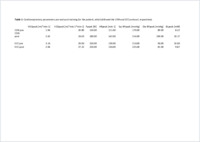
The first patients with CAD, who completed the training, showed protocol-specific improvements, reflecting, in part, the lower aerobic training status of the patient completing the CON protocol. Rehabilitation under the CON protocol, more than under the ECC protocol, improved cardiovascular parameters, that is, VO2peak (+26% vs -6%), and Ppeak (+20% vs 0%), and exaggerated muscle deoxygenation during the ramp test (248% vs 49%). Conversely, markers of metabolic stress and recovery from the exhaustive ramp test improved more after the ECC than the CON protocol, that is, peak blood lactate (-9% vs +20%) and peak SmO2 (+7% vs -7%). Anaerobic muscle power only improved after the CON protocol (+18% vs -15%).
CONCLUSIONS
This study indicates the potential of the implemented CON and ECC protocols of pedaling-type interval exercise to improve oxygen metabolism of exercised muscle groups while maintaining or even increasing the Ppeak. The ECC training protocol seemingly provided a lower cardiovascular stimulus in patients with CAD while specifically enhancing the reoxygenation and blood lactate clearance in recruited muscle groups during recovery from exercise.
TRIAL REGISTRATION
ClinicalTrials.gov NCT02845063; https://clinicaltrials.gov/ct2/show/NCT02845063.
Cardiovascular diseases are the leading causes of death worldwide, and coronary artery disease (CAD) is one of the most common causes of death in Europe. Leading cardiac societies recommend exercise as an integral part of cardiovascular rehabilitation because it reduces the morbidity and mortality of patients with CAD. Continuous low-intensity exercise using shortening muscle actions (concentric, CON) is a common training modality during cardiovascular rehabilitation. However, a growing clinical interest has been recently developed in high-intensity interval training (HIIT) for stable patients with CAD. Exercise performed with lengthening muscle actions (eccentric, ECC) could be tolerated better by patients with CAD as they can be performed with higher loads and lower metabolic cost than CON exercise.
OBJECTIVE
We developed a clinical protocol on a soft robot to compare cardiovascular and muscle effects of repeated and work-matched CON versus ECC pedaling-type interval exercise between patients with CAD during cardiovascular rehabilitation. This study aims to ascertain whether the developed training protocols affect peak oxygen uptake (VO2peak), peak aerobic power output (Ppeak), and parameters of muscle oxygen saturation (SmO2) during exercise, and anaerobic muscle power.
METHODS
We will randomize 20-30 subjects to either the CON or ECC group. Both groups will perform a ramp test to exhaustion before and after the training period to measure cardiovascular parameters and SmO2. Moreover, the aerobic skeletal muscle power (Ppeak) is measured weekly during the 8-week training period using a simulated squat jump and a counter movement jump on the soft robot and used to adjust the training load. The pedaling-type interval exercise on the soft robot is performed involving either CON or ECC muscle actions. The soft robotic device being used is a closed kinetic chain, force-controlled interactive training, and testing device for the lower extremities, which consists of two independent pedals and free footplates that are operated by pneumatic artificial muscles.
RESULTS
The first patients with CAD, who completed the training, showed protocol-specific improvements, reflecting, in part, the lower aerobic training status of the patient completing the CON protocol. Rehabilitation under the CON protocol, more than under the ECC protocol, improved cardiovascular parameters, that is, VO2peak (+26% vs -6%), and Ppeak (+20% vs 0%), and exaggerated muscle deoxygenation during the ramp test (248% vs 49%). Conversely, markers of metabolic stress and recovery from the exhaustive ramp test improved more after the ECC than the CON protocol, that is, peak blood lactate (-9% vs +20%) and peak SmO2 (+7% vs -7%). Anaerobic muscle power only improved after the CON protocol (+18% vs -15%).
CONCLUSIONS
This study indicates the potential of the implemented CON and ECC protocols of pedaling-type interval exercise to improve oxygen metabolism of exercised muscle groups while maintaining or even increasing the Ppeak. The ECC training protocol seemingly provided a lower cardiovascular stimulus in patients with CAD while specifically enhancing the reoxygenation and blood lactate clearance in recruited muscle groups during recovery from exercise.
TRIAL REGISTRATION
ClinicalTrials.gov NCT02845063; https://clinicaltrials.gov/ct2/show/NCT02845063.
- Language
-
- English
- Open access status
- gold
- Identifiers
-
- DOI 10.2196/10970
- PMID 30916659
- Persistent URL
- https://folia.unifr.ch/global/documents/26176
Statistics
Document views: 27
File downloads:
- Full-text: 0